
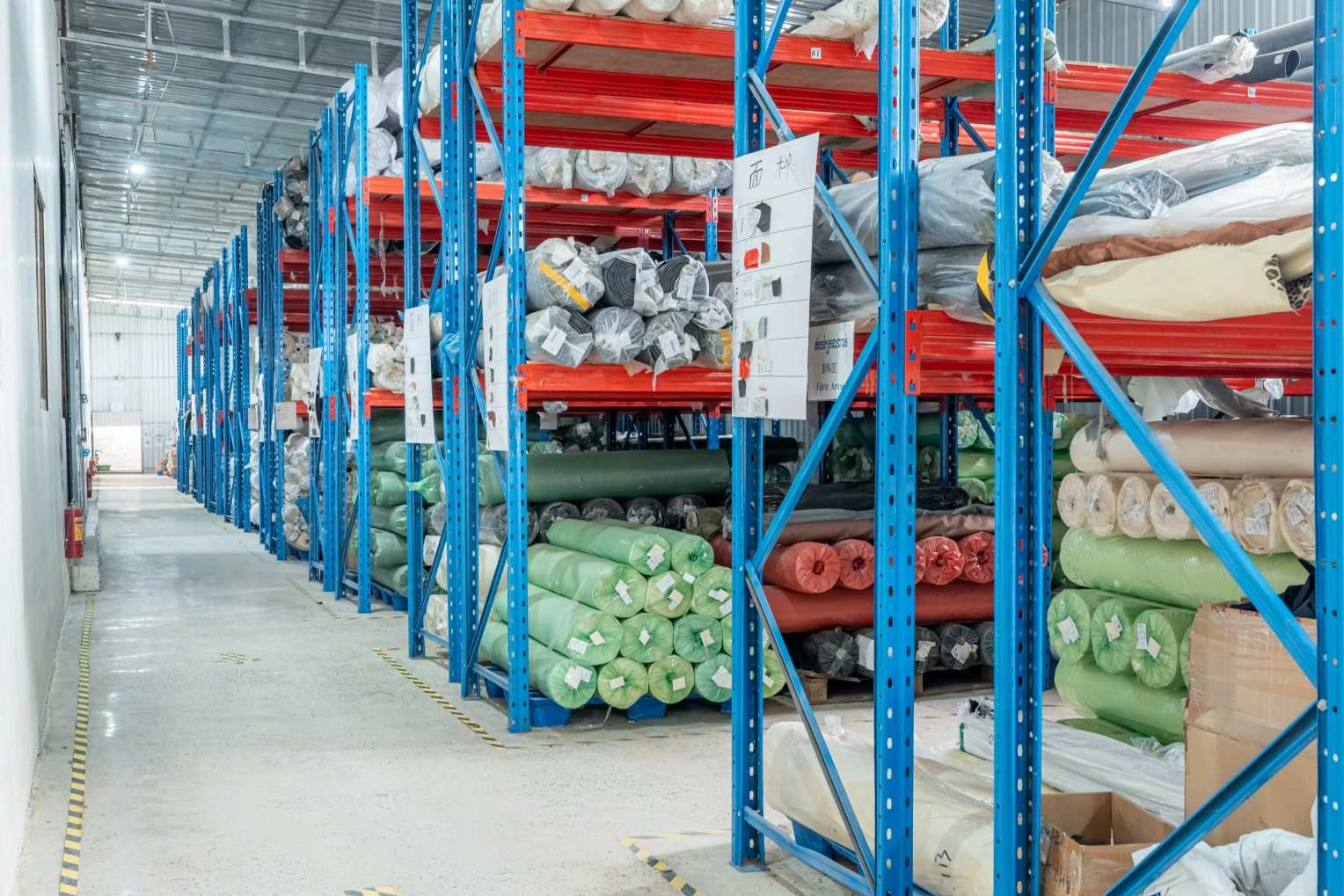
A brand can switch a tote’s outer fabric to recycled polyester and still have to redesign the handle attachment, test the lining for color transfer, or change the wording on the hangtag. The new fabric changes how the bag is made, how it holds up in use, and what the brand can say about it.
Sustainable materials are pushing handbag manufacturing toward more detailed specifications. Brands and factories need to agree on where a material goes, how it performs in the finished bag, and what records support a material claim. Settling those questions during sampling makes it easier to carry an approved design into bulk production.
How material choices change the way a handbag is made
Recycled polyester brings new options for shells and linings
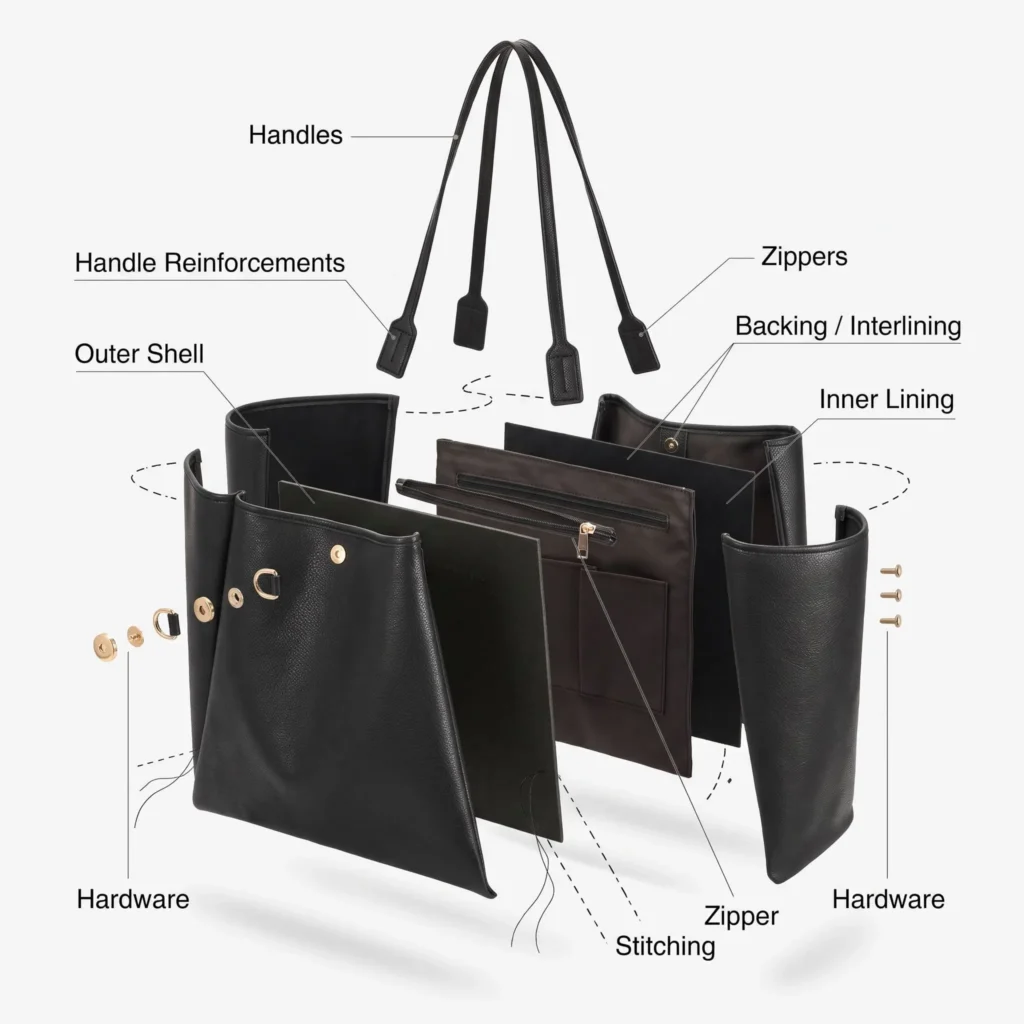
Recycled polyester (rPET) can be specified for a woven outer shell or a lightweight lining. In a soft tote, the shell needs enough body to hold its intended shape and enough tear resistance around the handle seams. As a lining, the same fiber serves a different purpose. The fabric needs to resist snagging, hold at the pocket seams, and avoid rubbing color onto the contents.
A fabric specification should include composition, fabric weight, weave, and any backing or coating. Those details help a factory reproduce the approved hand feel and compare the next delivery against the sample. At Hongri Bag, we help brands evaluate rPET swatches for the intended part of the bag, check how they work with the proposed construction, and inspect incoming material against the approved specification. See our handbag materials and finishes.
Canvas changes the balance between weight and structure
Canvas can work for soft totes and everyday shoulder bags, with the weave and fabric weight influencing how the bag hangs and feels. Canvas describes a fabric construction. A sourcing specification still needs to identify the fibers and establish any recycled or organic content separately.
A heavier canvas can give a tote more body. It can also create bulky seams where the base, side panel, and binding meet. A lighter canvas may suit a packable style but call for reinforcement at the handles. A prototype shows how those choices affect shape, weight, and ease of sewing. For dyed canvas, agree on the shade range and test for color transfer, especially where dark fabric meets light trim or clothing.
Leather alternatives bring coatings and backings into the specification
A leather-like sheet may combine a surface finish, a polymer layer, and a textile backing. For a plant-based option, ask which layer contains the plant-derived ingredient, how much of the sheet it represents, and what makes up the other layers. A bio-based ingredient describes the source of part of the material. Biodegradability depends on the complete material and the conditions in which it breaks down. European Commission guidance on bio-based materials
For a structured crossbody, test the proposed sheet at the tightest bend of the flap and where the strap attaches. Flexing can reveal cracking, a peel test can help assess the bond to the backing, and a sewn sample shows how the material behaves under a needle and at the finished edge. If a collection uses genuine leather and specifies Leather Working Group sourcing, identify the tannery and the scope of its certification when approving the leather. Leather Working Group certification guidance
Durability and repair start with the pattern
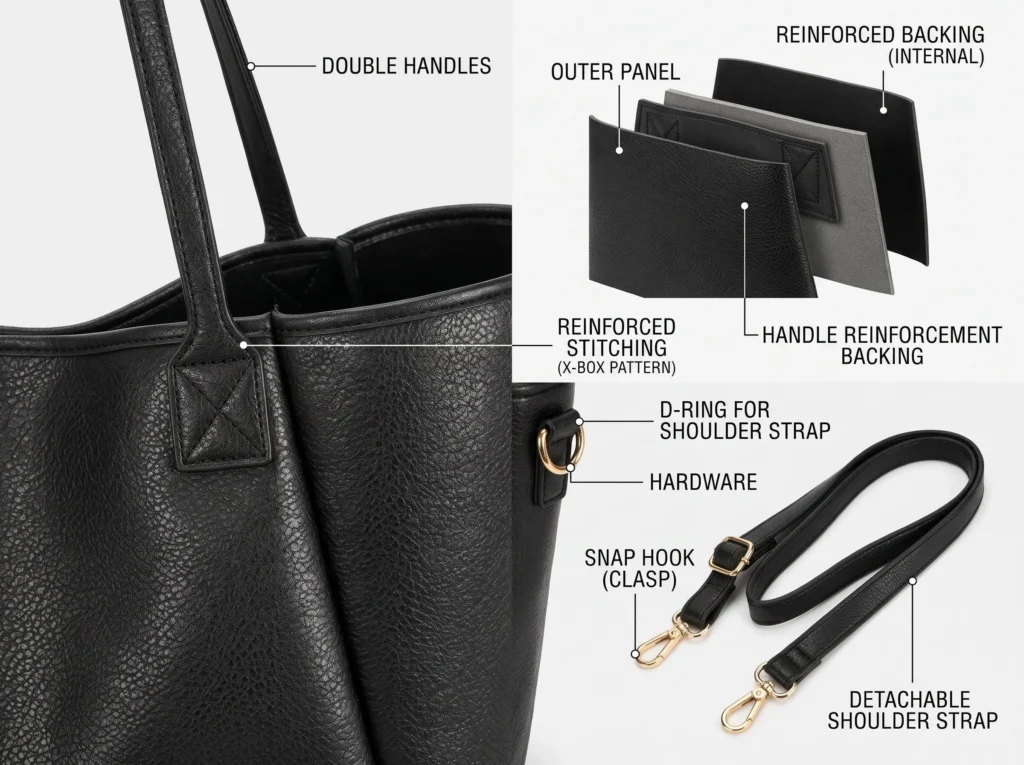
The parts most likely to show wear help determine where to put reinforcement. On a daily carry tote, the handle anchors and base corners warrant particular attention. On a flap bag, check the repeatedly folded edge and the finish around the closure. Testing those areas on an assembled bag can reveal problems that a flat swatch misses, such as a strong fabric pulling at a poorly placed seam.
Construction also affects what happens after a part wears out. A detachable strap can be replaced independently where compatible spares are available. Access to the zipper stitching can make a repair easier. Where the design needs a coating or bonded backing, record the complete construction. That information helps a recovery partner judge whether the materials can be separated and accepted by its process. European Environment Agency guidance on circular textile design
Material records need to follow the bag into production
A component-level bill of materials (BOM) records the shell, lining, webbing, backing, and trims separately. If only the lining uses recycled polyester, keeping that detail in the BOM gives the brand a clear basis for a lining-specific statement. For a certified recycled-content claim, confirm which chain-of-custody standard applies, which components and transactions it covers, and what evidence is required for the finished style. Textile Exchange guidance on the Recycled Claim Standard and Global Recycled Standard
For example, a brand developing a canvas tote with an rPET lining could approve the lining by material code and color, then test the lining seams and check for color transfer where it touches the shell. When the bulk fabric arrives, the factory can compare its identity, lot, color, and weight with the approved material and agreed tolerances. A change of supplier, coating, or backing calls for a review of which tests and documents need to be updated. That is how a swatch decision carries through to repeat orders. See Hongri Bag’s handbag quality control process.

Develop the material and the handbag together
If you’re developing a collection, start with the intended use, the part of the bag you want to change, and the material statement you want to support. Our custom handbag manufacturing team can help assess material options alongside structure, finish, and sampling needs. Share your sketch, reference sample, or tech pack with Hongri Bag so we can discuss material availability, sample testing, and documentation for your target market.