

Manufacturer of Custom Tote Bags
We develop genuine leather and PU totes for brands building work and everyday collections. Our in-house sample room can work from your sketch, tech pack or reference bag to develop the shape, handle length, opening and interior before bulk production.
Leather & PU Tote Bags
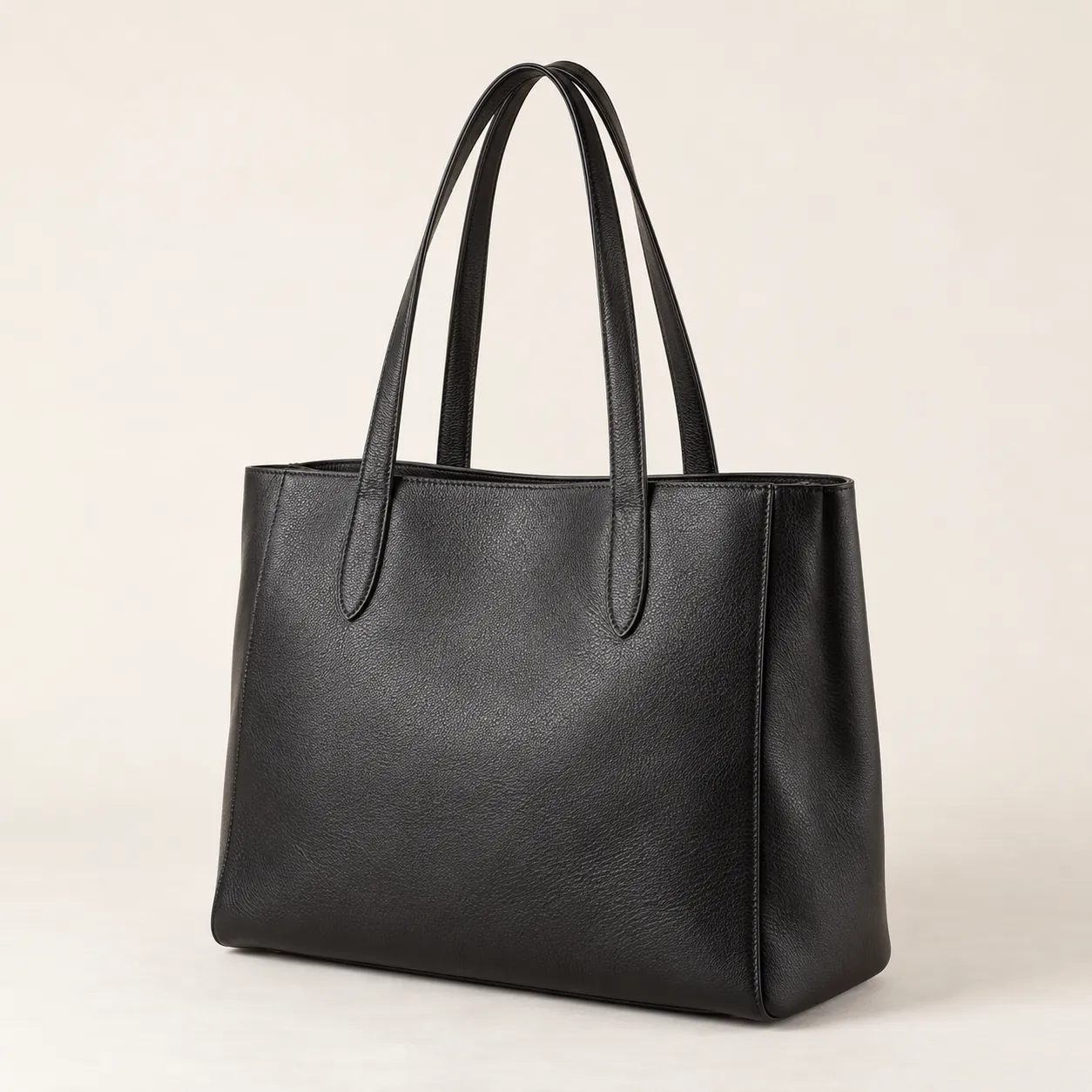
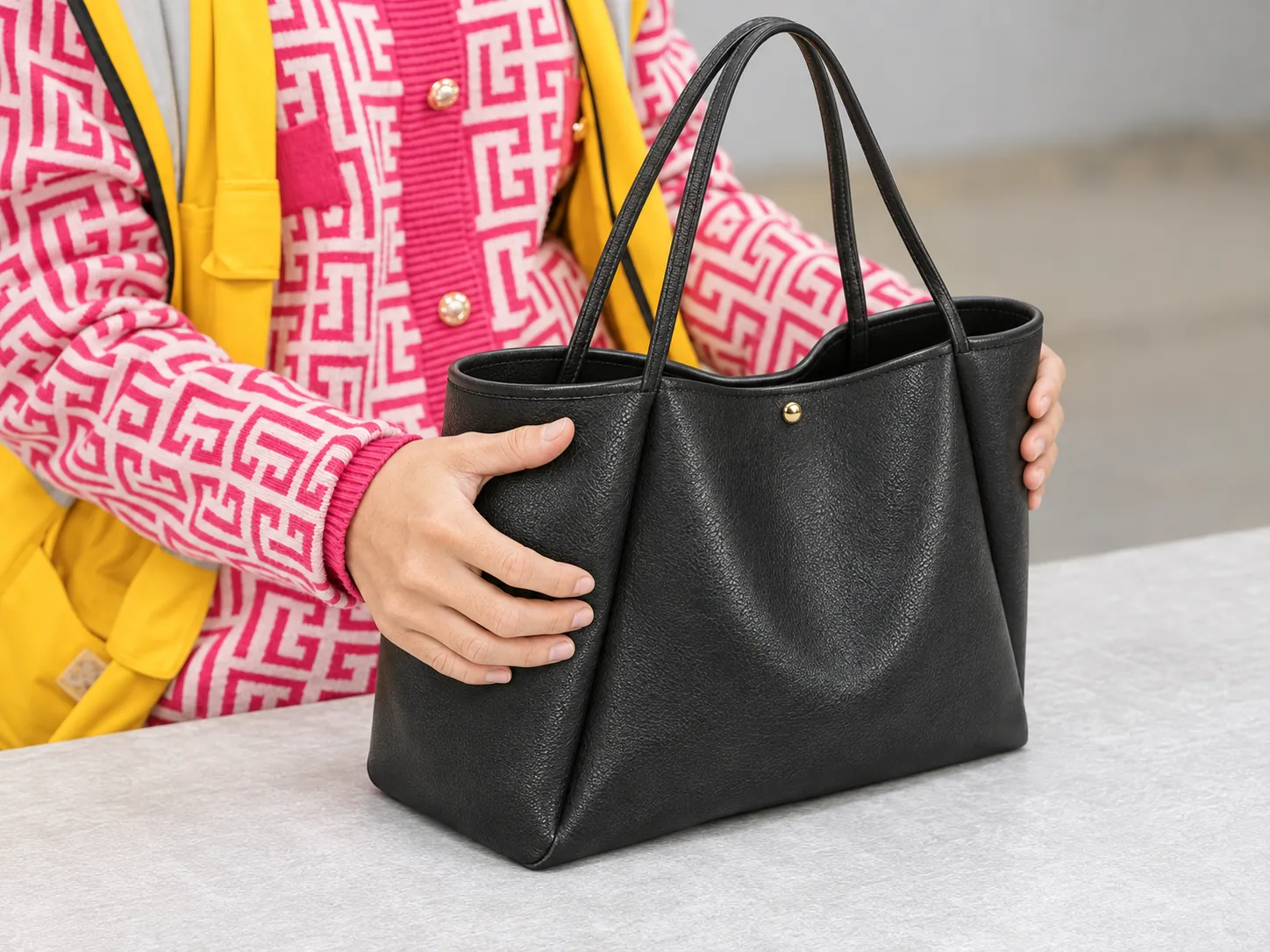
Develop a structured tote for a work collection or a softer carryall for everyday use. We can adjust the body shape, handle drop and interior layout around what the bag needs to carry. The black sample shows one possible silhouette with long handles and a wide opening.
Genuine Leather or PU for Your Tote?
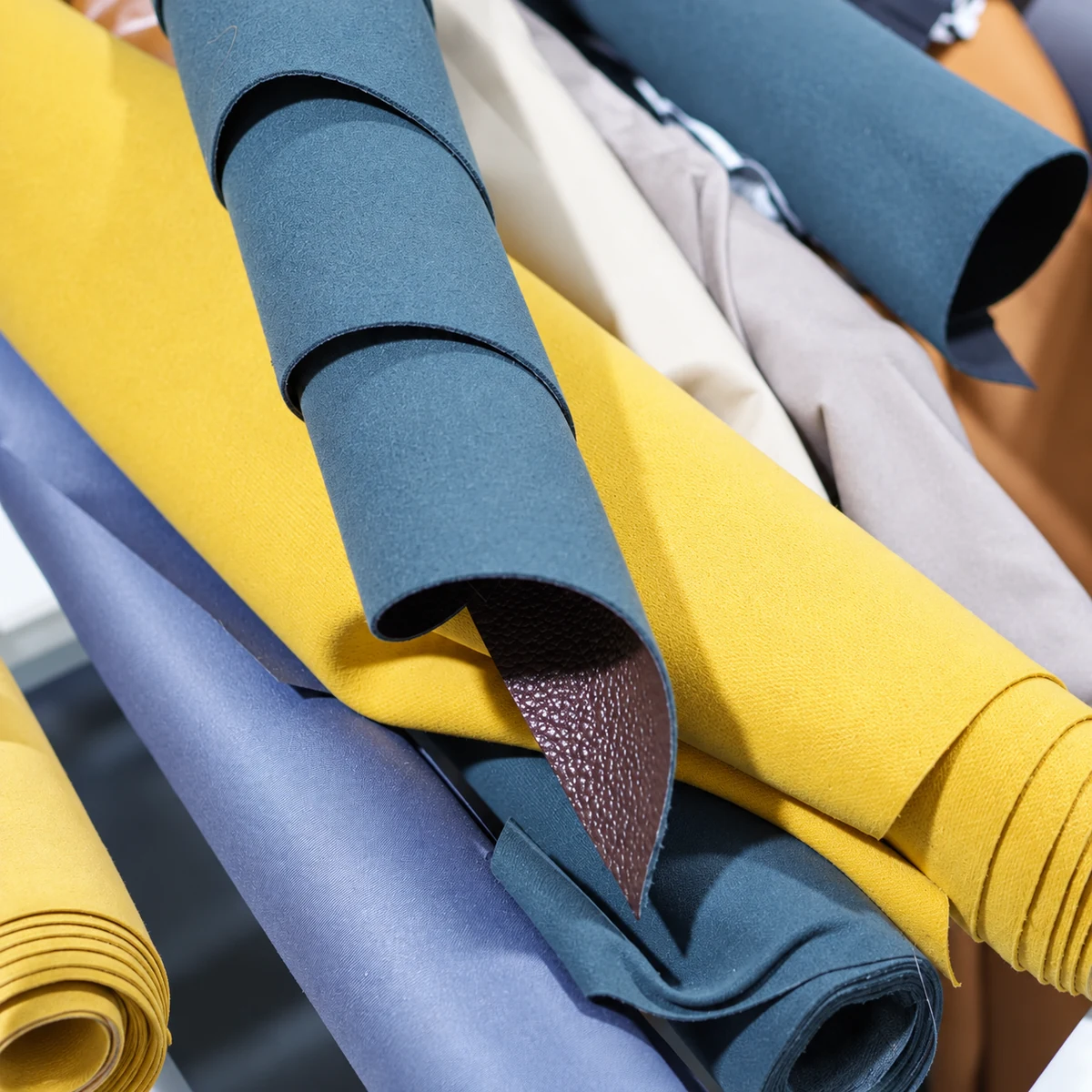
The same tote shape can feel quite different depending on the outer material, its thickness and the support built into the panels. Compare swatches first, then review how the selected material behaves on a sewn sample.
| What to compare | Genuine leather | PU |
|---|---|---|
| Surface and color | Review the grain and color on actual swatches. Agree on the acceptable range of natural variation before bulk cutting. | Approve the exact finish, grain and color against a reference swatch. Record the material code so the approved surface can be identified for the order. |
| Feel and structure | Check the selected leather at the proposed thickness. Bend the handle and inspect how the body stands with the intended load. | Review the surface and backing together. Check how the chosen PU bends at seams and how the body holds its shape with the proposed lining and support. |
| Edge finish | Review edge paint or binding on the handle and opening, where the material bends during use. | Review the finish on the actual material stack. Thickness at folded edges can change how a seam sits and how the opening feels. |
Design the Tote Around What It Carries
A tote can look roomy on a shelf and still be awkward to use. We check how the opening, pockets and handles work together once the bag is packed.
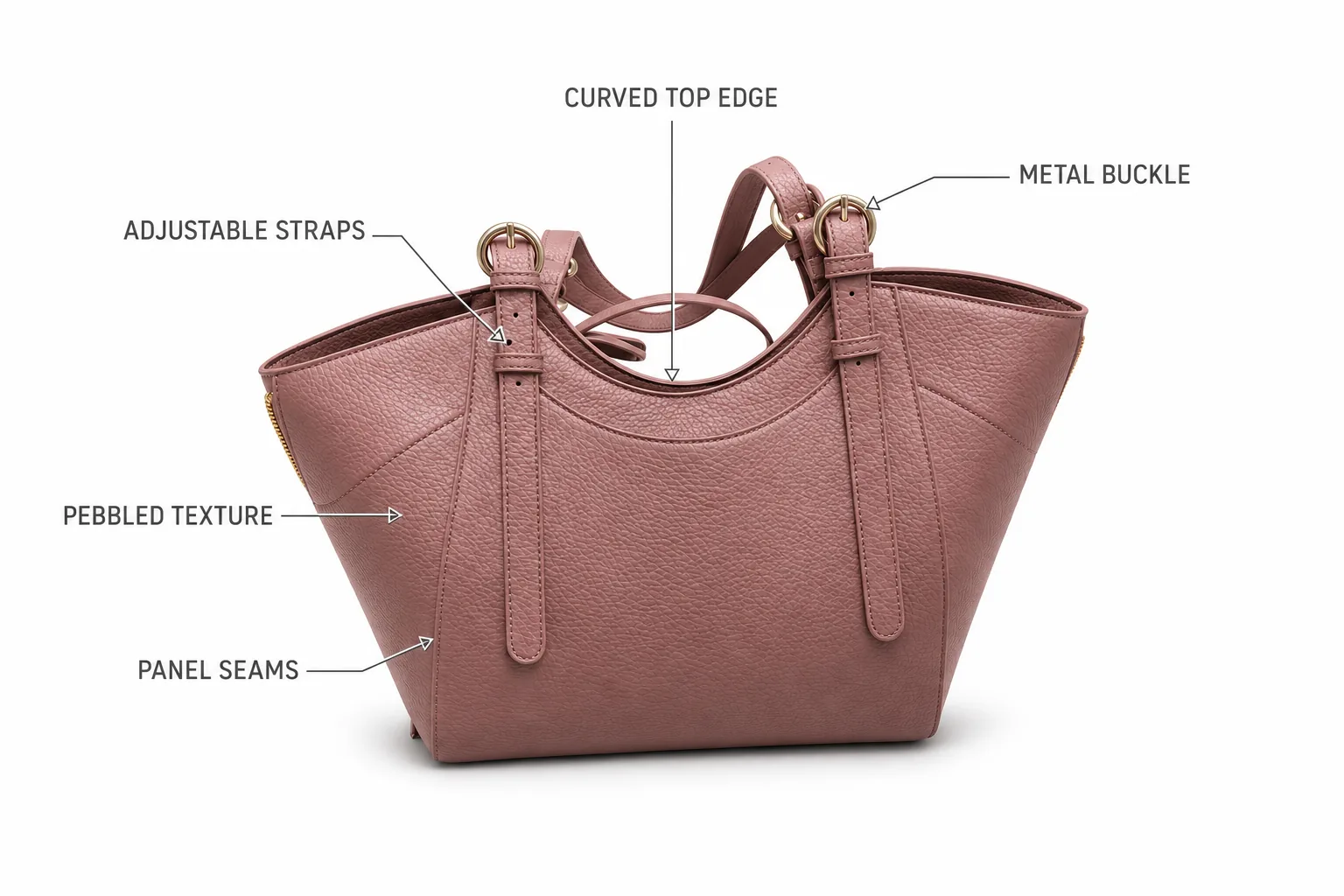
A wide body still needs a usable opening
Measure the clear opening with the chosen closure fitted. An open top gives quick access to bulky items. A top zip encloses the main compartment and can narrow the usable opening at the ends. A magnetic snap closes at the center and leaves the sides easier to reach.
Give small items their own place
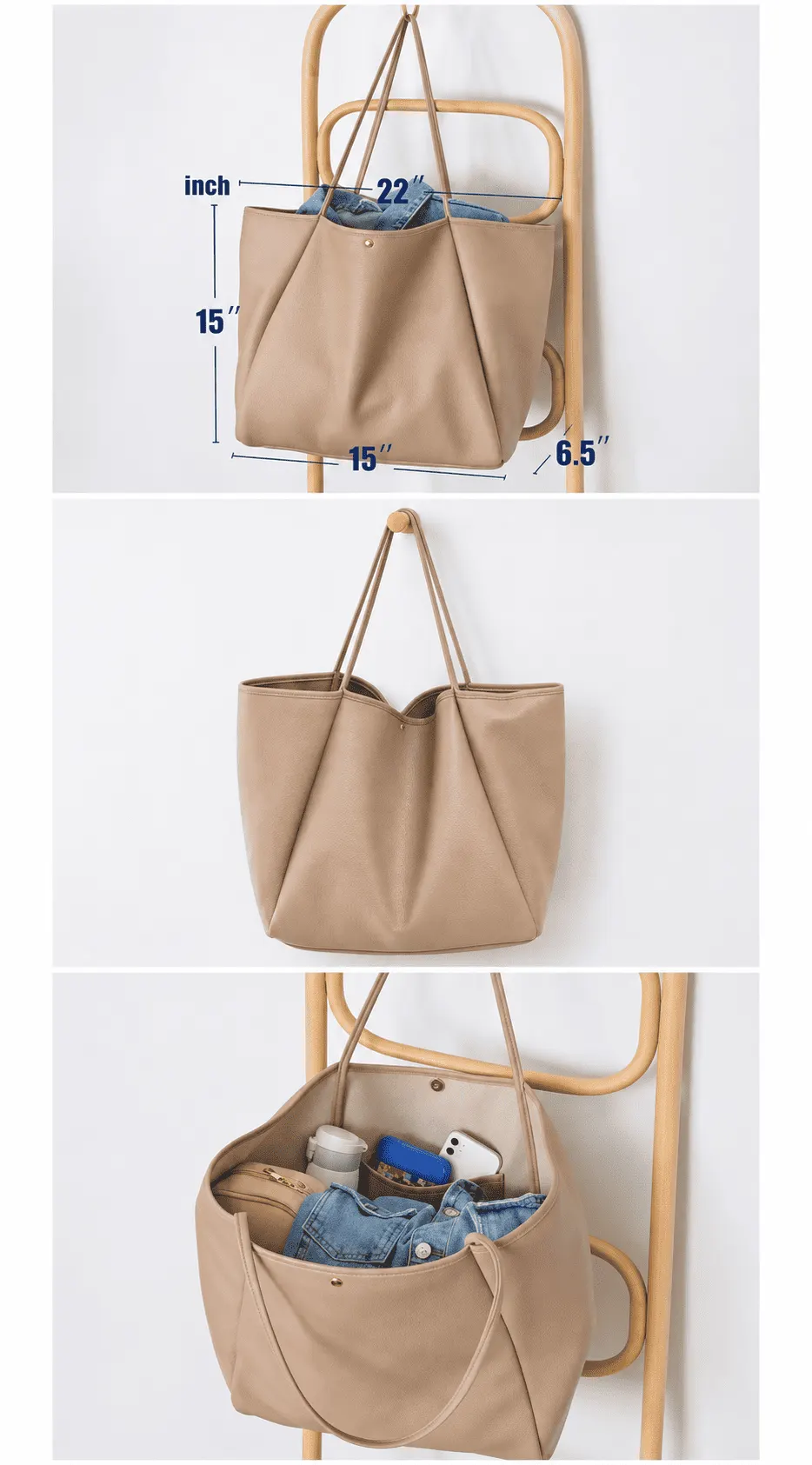
An open main compartment leaves room for bulky items. A slip pocket keeps a phone within reach, while a zip pocket keeps keys or cards together. A divider can separate work items from personal items. Check the space left on both sides after the lining and divider are fitted.
Check the handles under the intended load
Handle drop affects whether the tote sits comfortably by hand or over a shoulder, including over a coat. On the sample, check handle clearance, strap width and how the attachment points sit when the bag is loaded. We can adjust those details before production.
Develop a Tote for Your Label
Work through the details in our sample room
Start with your own design or use a reference silhouette to discuss changes. We can adjust the pattern, opening, lining and handle position, then make a sample for you to review with the items the bag is designed to carry.
Approve the branding and packaging with the bag
We can develop details such as a debossed logo or metal nameplate, coordinate hardware and lining colors, and prepare branded dust bags, hangtags and retail packaging. Review the logo placement on the sample alongside the chosen finish and packaging.
How We Check Your Tote Before Shipment
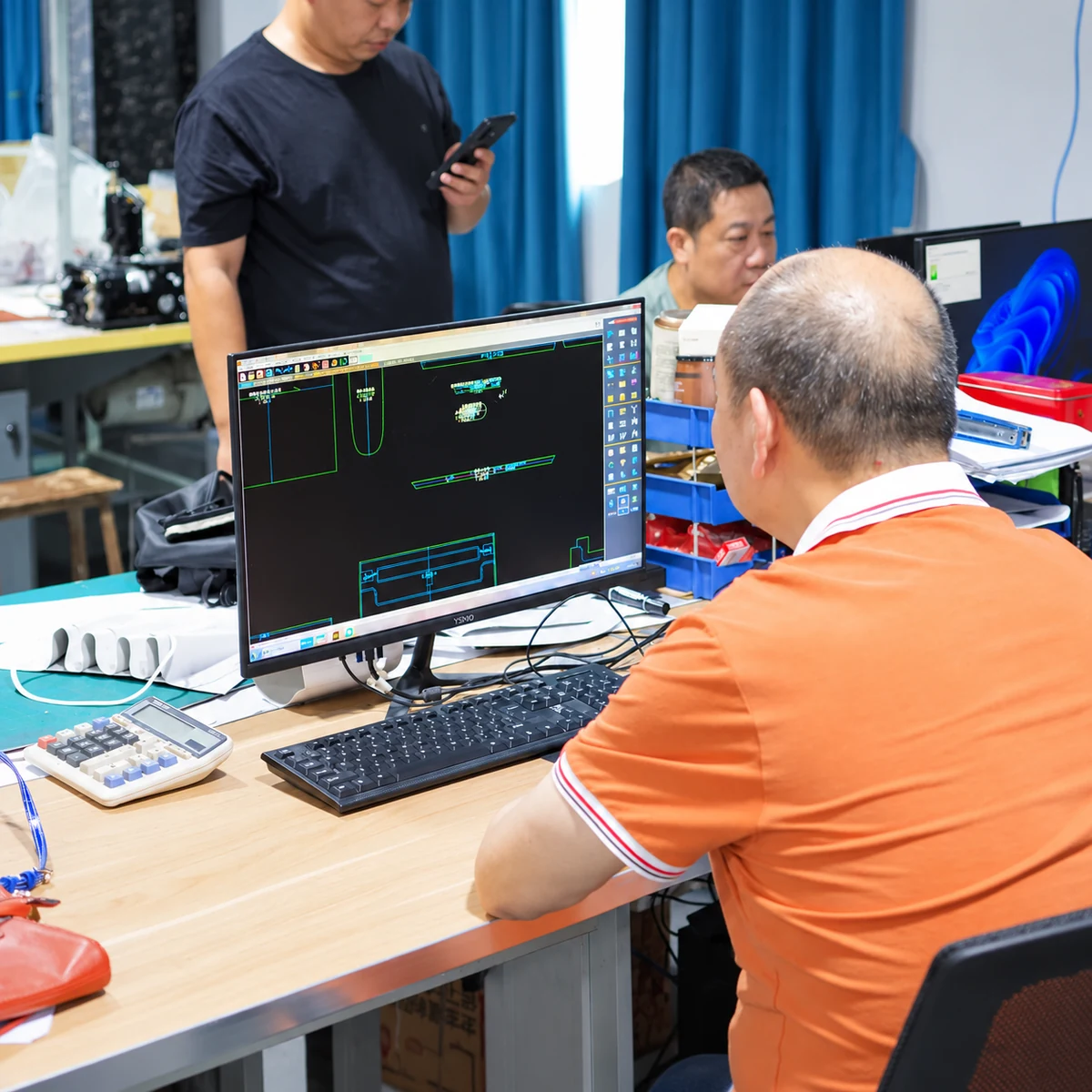
We use approved samples and final specifications as the basis for production. Before mass production begins, our Dongguan facility verifies key details—such as leather color, hardware installation, stitching techniques, and closure mechanisms—to ensure they align with the approved samples. During production and final inspection in Cambodia, we conduct further checks on color consistency, handle reinforcement, edge finishing, and hardware. We also verify that all materials, stitching, closures, finished product dimensions, and packaging meet the specific requirements of the order.
For items subject to specific load-bearing or wear-and-tear requirements, pre-production testing must be performed—covering areas such as the strength of handles and seams, the durability of magnetic closures under repeated use, and the potential for color transfer on light-colored surfaces.
View our quality control process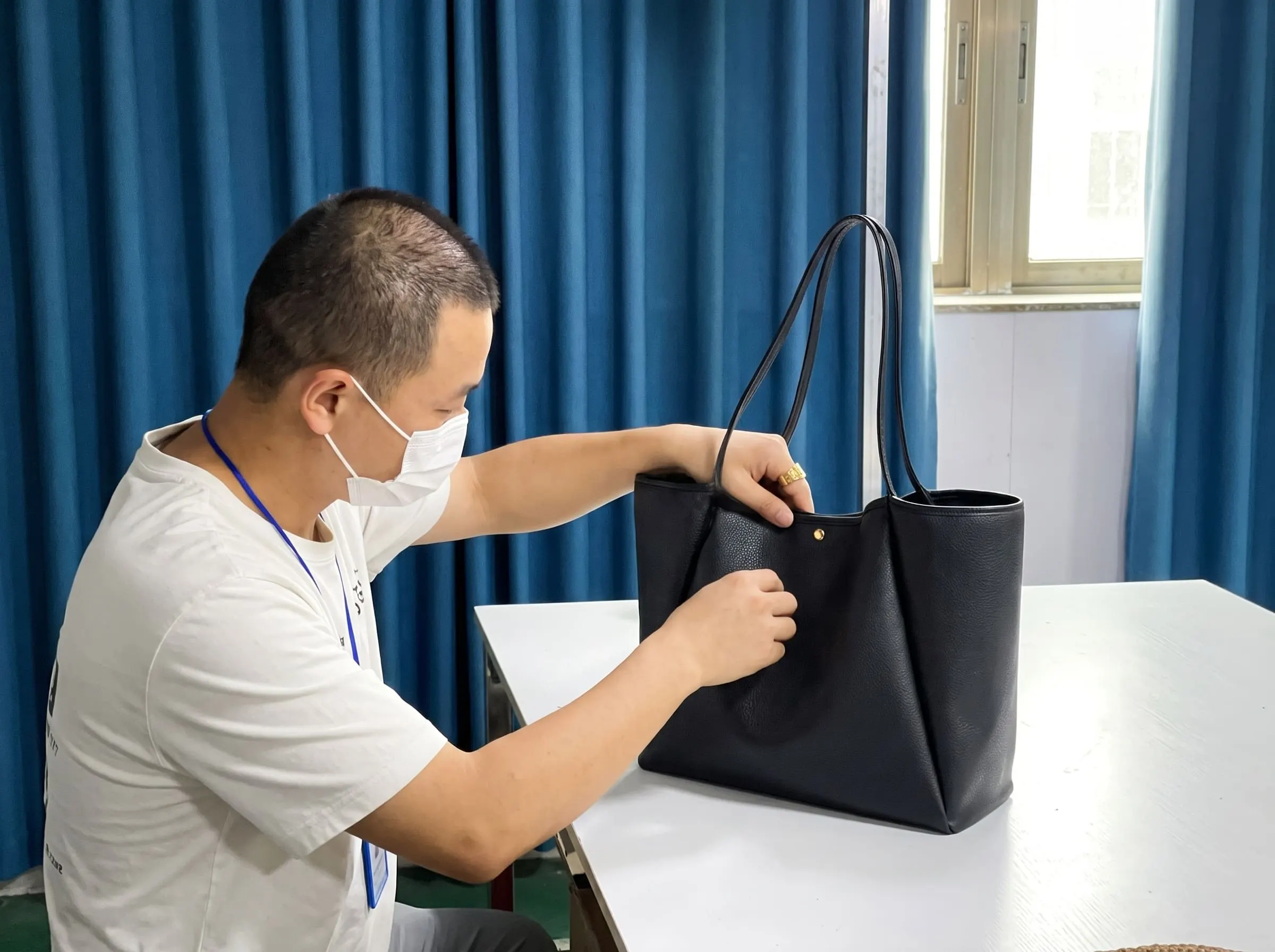
A Short Guide to Ordering Custom Tote Bags
Will a work tote fit a laptop in its sleeve?
Use the actual length, width and thickness of the laptop with its sleeve. Check those measurements against the clear opening and the inside dimensions of the intended compartment. Zipper ends, seams and padding can reduce the usable space. Slide the sleeved laptop in and out of the sample while the bag contains its usual load.
What should be approved before a bulk order?
Approve the bag shape, material swatch, hardware finish, logo position and packaging together. Keep the signed-off sample and latest specification available for production. If a material or component changes after approval, review the affected detail on the updated sample before releasing that change.
What affects the minimum order and production schedule?
The final design, material and hardware sourcing, number of colors, and packaging requirements all affect the quote and production plan. Special colors or custom metal parts can bring their own supplier minimums. Quote the quantity by style and color so those requirements can be evaluated against the proposed order.
Tote Bags Manufacturing FAQ
Find answers to common questions about our custom OEM/ODM tote bag manufacturing processes, minimum orders, and production capabilities.
What materials are available for custom OEM/ODM tote bags?
What is the minimum order quantity (MOQ) for wholesale?
How long does it take to produce a custom prototype?
Can you accommodate large volume wholesale orders?
Are your manufacturing facilities certified?
Do you provide custom packaging and labeling?
Have more specific requirements for your tote bag project?
Request a Quote for Custom Tote Bags
Tell us about the tote bag you’re developing. Share the style, material and estimated quantity if you have them. If you’re still deciding, tell us how the bag will be used so we can suggest material and sampling options.