
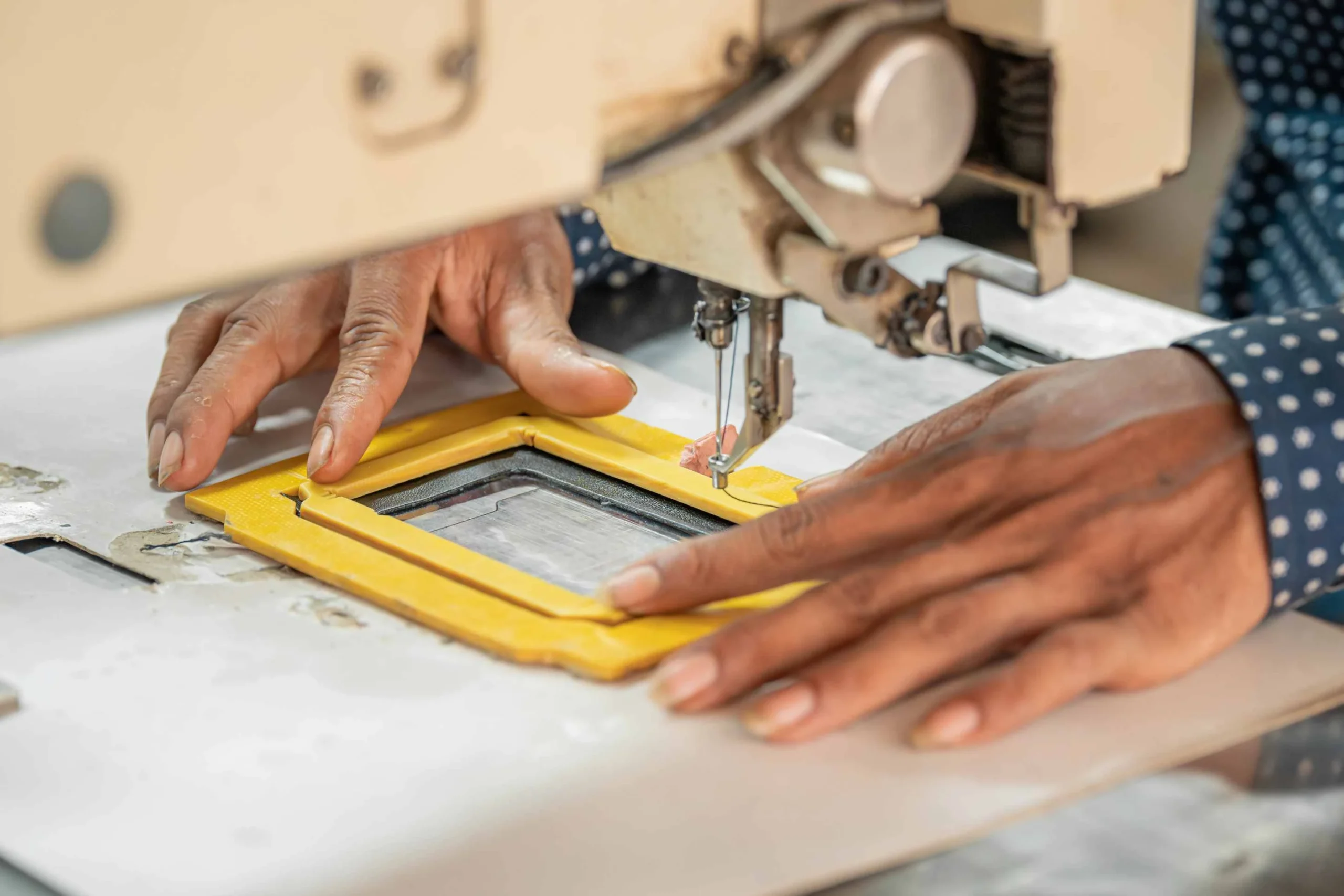
A handbag sketch can show the right proportions and still leave practical questions open. Will the zipper give the buyer enough room to reach inside? Will the base keep its shape under load? Will the strap sit comfortably when the bag is full? A first prototype lets a brand answer those questions while there is still time to change the pattern.
Hongri Bag’s in-house sample room in Dongguan can make a first handbag prototype in as little as seven days for suitable projects. That timing is for making the first physical sample. Before starting, we review the brief, check material and hardware availability, and confirm the sample completion date. Revisions, courier transit, pre-production approval, and bulk manufacturing each have their own place in the launch schedule.
1. Turn the sketch into a brief the sample room can build from
A sketch, reference bag, or tech pack is enough to start the conversation. To begin making the sample, agree on the dimensions, intended use, opening and closure, strap length or handle drop, pocket layout, shell, and lining. Mark which features are essential and which can be adjusted during development.
For a zip-top work tote, give the dimensions of the laptop or other items it needs to hold. The bag’s exterior width may look generous on paper, but the opening can narrow at the zipper ends. Defining what the bag needs to carry gives the sample room a way to check that the design works. See our handbag design and sampling service.
2. Develop the pattern and confirm the materials
The pattern maker turns the brief into pieces for the shell, lining, gusset, and pockets, with allowances for seams and locations for hardware and reinforcement. A curved zipper opening, for example, needs to work with the shape of the surrounding panels and the stiffness of the selected material. Those choices affect both the silhouette and how the bag is assembled. Leather goods prototyping and patternmaking reference
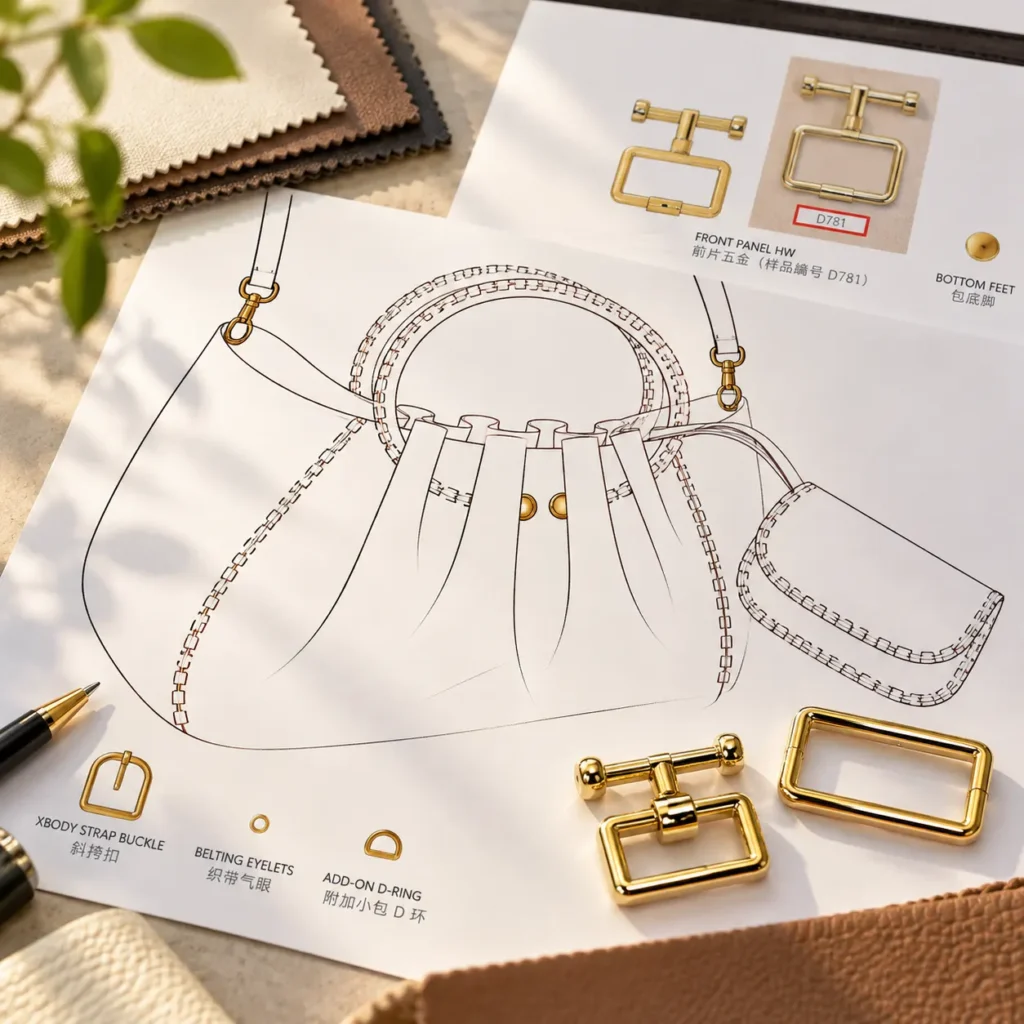
The sample room also checks how the shell, lining, and hardware work together. A stocked fabric and existing zipper are easier to schedule than a custom-dyed shell and a clasp that needs its own mold. If the buyer agrees to a temporary component for the first prototype, record it on the sample notes. A substitute clasp might be enough to review placement, while its finish, weight, and closure feel still need to be checked with the final part. See our materials and finishes options.
3. Cut, assemble, and check the first prototype
Once the pattern and sample materials are ready, the sample maker cuts the pieces, assembles the shell and lining, and fits the handles, closure, and hardware. The assembled bag shows where layers build up, whether the gusset opens as intended, and how the bag sits with its intended contents.
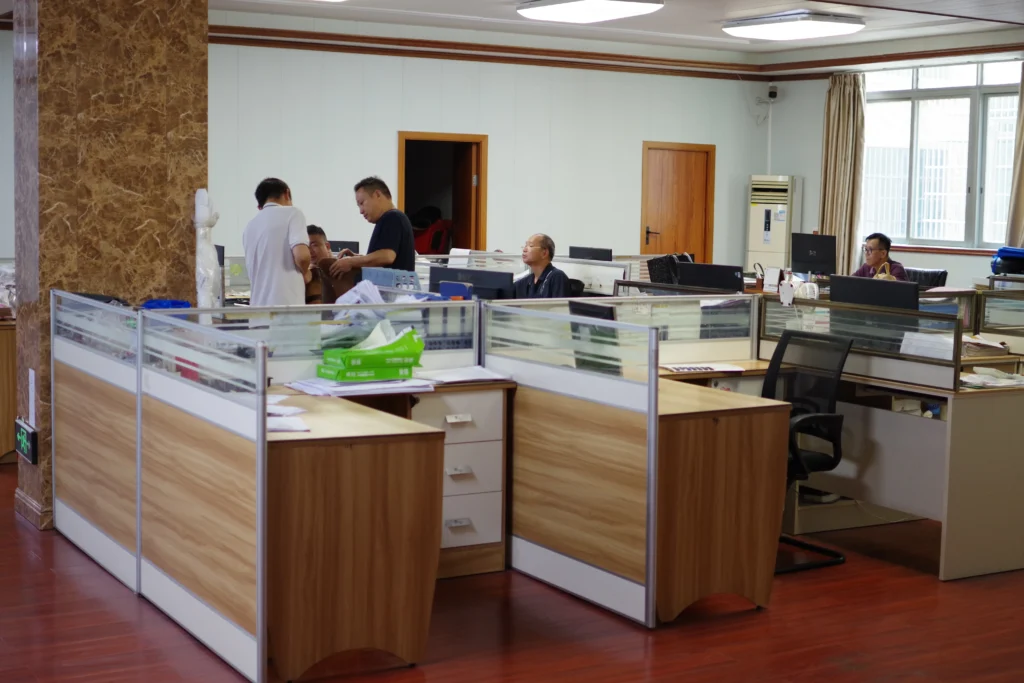
Review the sample against the brief. Check dimensions, symmetry, logo placement, zipper travel, pocket access, and handle or strap comfort. Use the intended contents to check the opening and carry position. Agree separately on any formal load, abrasion, or color transfer tests needed for the style.
Give feedback against the sample version and mark the exact changes on a photo or drawing. For example, “move the inner pocket 20 mm down so the zipper clears the laptop sleeve” gives the sample maker a specific adjustment to test on the next version.
4. Approve the pre-production sample and plan the launch
The first prototype gives the buyer a design to review. Once the revisions are settled, the pre-production sample confirms how the bulk order should be made, using the intended production materials, hardware, and construction. Review it together with the final measurements, bill of materials, finishes, and packaging instructions. If an item is still pending, identify it and agree on how it will be approved before production.
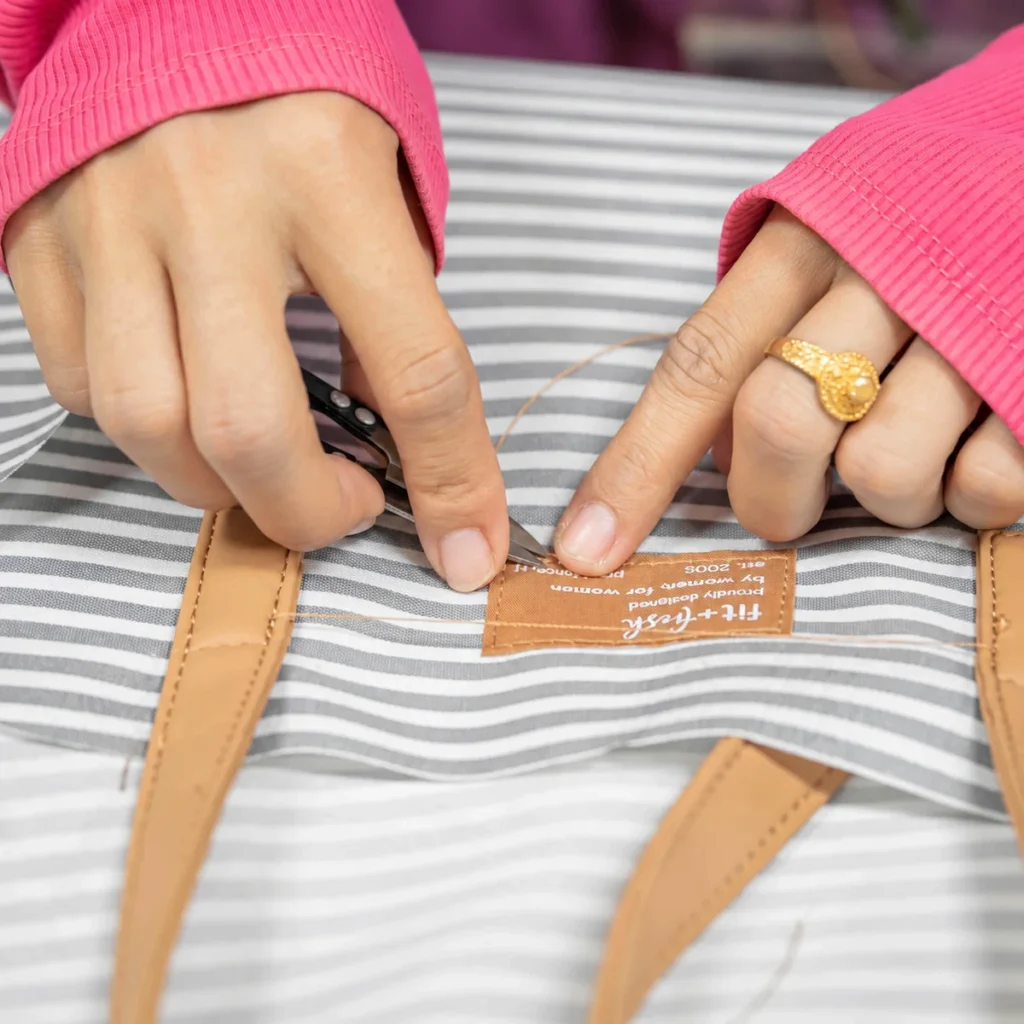
The signed-off sample gives the production and quality teams a physical reference. At line startup, check the first production unit against that sample and the final specifications. If the bags are headed to retail, approve the hangtags, barcodes, and packing requirements while the production schedule is being set. See how Hongri Bag manages the handover from prototype to mass production.
What to send if you are targeting a seven-day first sample
Send the latest sketch or tech pack, target dimensions, intended contents, preferred materials, and logo artwork. Identify any parts that require custom tooling or a specific supplier. Share both the date you need the prototype in hand and the target retail launch date so sampling, shipping, revisions, and production can be planned separately.
Have a design ready to develop? Share your handbag brief with Hongri Bag so our team can review material availability, identify open design decisions, and confirm the earliest practical date for your first sample.